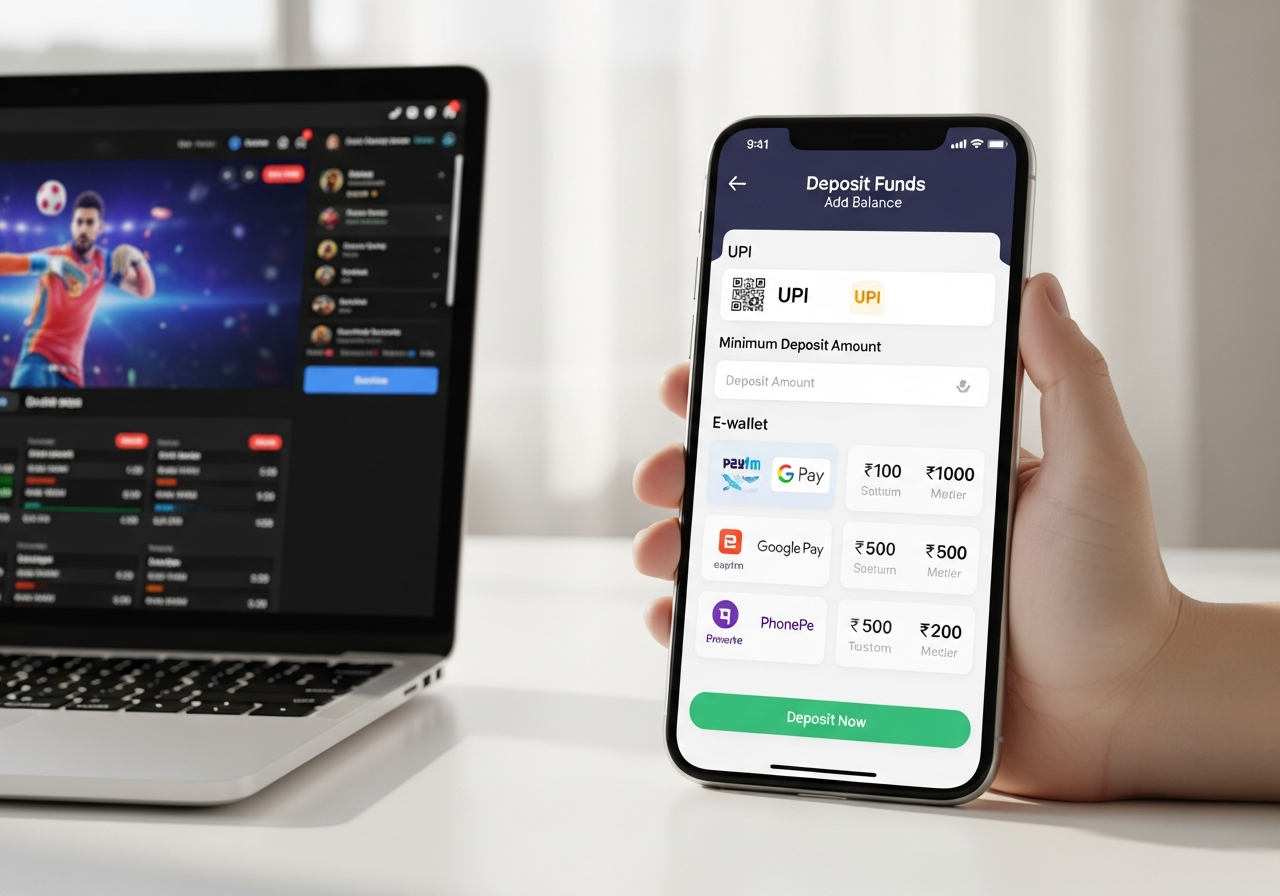
Indian bettors increasingly rely on local e-wallets and UPI apps to fund their betting accounts, drawn by instant processing, familiar interfaces and widespread acceptance across digital platforms. Yet minimum deposit limits for these payment methods vary dramatically from site to site—ranging from as little as ₹10 on niche cricket apps to ₹1,000 or more on casino-focused platforms. Understanding these thresholds is essential for managing your bankroll, choosing the right betting site and unlocking bonus promotions without overcommitting funds.
Minimum deposit amounts shape accessibility for casual punters and micro-stake players, determine which bonuses you can claim and influence how you spread risk across multiple platforms. This guide explores the deposit ranges for popular Indian e-wallets—Paytm, PhonePe, Google Pay, UPI and global options like Skrill and Neteller—and explains the factors that drive these limits, their impact on your betting strategy and what future trends may bring.
How Minimum Deposit Limits Work With Indian E-Wallets
Minimum deposit limits are jointly determined by bookmaker policies and payment provider restrictions. Each betting platform sets floor amounts based on operational costs, risk appetite and target customer segments, while payment processors impose their own transaction minimums and KYC-driven caps. For instance, a UPI app may allow ₹1 transfers in general commerce, yet a betting site using the same gateway might enforce a ₹300 floor to cover processing fees and fraud-prevention overheads.
Differences between payment methods are pronounced. UPI apps such as PhonePe, Google Pay and Paytm typically share similar minimums—often ₹300 to ₹500 on mainstream sports betting sites—because they route through common merchant aggregators. International e-wallets like Skrill or Neteller may carry higher thresholds (₹500+) due to currency-conversion steps and cross-border compliance checks. Debit and credit cards often sit in the middle, while newer wallets such as Jeton or AstroPay can vary widely depending on operator agreements.
On the other end of the spectrum, niche platforms targeting low-stake cricket bettors have pioneered ultra-low minimums. Apps focused on ball-by-ball markets or fantasy leagues may accept deposits as small as ₹10 to ₹50 via select UPI channels, making betting accessible to users with limited budgets. These outliers reflect a deliberate strategy to capture high-volume, small-ticket transactions rather than a handful of large deposits.
Key Factors That Drive Minimum Deposit Requirements
- Operator risk management: Sites set higher minimums to discourage bonus abuse, reduce administrative load from tiny bets and filter out users unlikely to generate meaningful turnover.
- Payment gateway limits: Processors impose their own floors based on interchange fees, compliance costs and transaction overhead, which operators pass on to bettors.
- Bonus eligibility thresholds: Welcome offers and reload bonuses often specify minimum qualifying deposits—usually ₹500 to ₹1,000—forcing sites to align wallet minimums with promotional structures.
- Fraud prevention: Lower minimums increase exposure to money-laundering red flags and test accounts; higher thresholds help verify serious users and streamline KYC workflows.
- Use-case segmentation: Casino-heavy brands targeting high rollers enforce steeper minimums, while sports-only or exchange platforms catering to price-sensitive cricket fans opt for lower entry points.
- Currency and conversion factors: Global wallets converting INR introduce rounding and FX spreads, nudging operators to set round-number minimums that absorb volatility.
Why Minimum Deposits Matter for Indian Bettors
For many punters, minimum deposit limits directly affect platform accessibility. A ₹1,000 floor can exclude casual players who prefer spreading ₹500 across two or three sites to compare odds, markets and user experience. Lower minimums—₹100 or ₹200—enable risk-free trials without locking significant capital into an unfamiliar operator.
Bankroll management also hinges on deposit flexibility. Conservative bettors practicing unit-based staking may want to deposit only ₹300 per site, preserving liquidity and limiting exposure to any single platform’s payout speed or dispute-resolution practices. Ultra-low minimums support micro-staking strategies popular in live cricket betting, where users place dozens of small wagers per match rather than single large bets.
Bonus eligibility introduces another layer. Many welcome offers require deposits of ₹500 or more to trigger matching funds or free bets; sites with ₹300 minimums may exclude users from premium promotions unless they top up. Conversely, platforms offering bonuses on ₹100 deposits attract budget-conscious bettors willing to accept smaller percentage matches in exchange for lower commitment.
Typical Minimum Deposit Ranges for Indian E-Wallets
The following table summarizes observed minimum deposit ranges for the most common e-wallets and UPI apps used on Indian betting platforms. Actual figures vary by operator, promotional campaigns and payment-provider agreements, but these ranges reflect current market norms across dozens of sites.
| E-wallet / App | Typical min deposit range (INR) | Common use case | Notes on limits/availability |
|---|---|---|---|
| UPI (generic) | ₹300–₹500 | Standard sports & live betting | Widely accepted; some niche sites offer ₹50–₹100 |
| Paytm | ₹300–₹500 | Cricket betting, exchanges | Lower end (₹100) on select platforms |
| PhonePe | ₹300–₹500 | Sports, casino combos | Similar to Paytm; instant processing |
| Google Pay | ₹300–₹500 | Mainstream betting sites | Occasionally ₹200 on promotional campaigns |
| Skrill | ₹500–₹1,000 | International operators | Higher due to FX and cross-border overhead |
| Neteller | ₹500–₹1,000 | VIP, high-roller platforms | Same bracket as Skrill; global reach |
| AstroPay | ₹200–₹500 | Emerging-market specialists | Flexible; growing India presence |
| Jeton | ₹300–₹700 | Casino-focused brands | Variable by operator agreement |
These ranges illustrate the broad variability in minimum deposit requirements. Local UPI-based wallets cluster tightly around ₹300–₹500, while international e-wallets skew higher. Budget-focused operators break from the pack by offering ₹50–₹200 minimums to court micro-stake players.
Average Minimum Deposits by Site Category
- Low-deposit sites (₹10–₹200): Niche cricket betting apps and fantasy platforms targeting casual, high-frequency users. These operators rely on volume and rapid turnover rather than large individual balances.
- Standard sports betting brands (₹300–₹500): The most common tier, encompassing mainstream bookmakers offering cricket, football and live markets. Minimums align with typical UPI and Paytm transaction floors.
- Casino-heavy operators (₹500–₹1,000): Platforms emphasizing slots, live dealer and table games often set higher thresholds to match bonus structures and attract players comfortable with larger session bankrolls.
- VIP and exchange platforms (₹1,000+): Premium exchanges, Asian handicap specialists and high-roller rooms enforce steep minimums to filter serious traders and limit administrative overhead from small-account churn.
- Hybrid mid-tier brands (₹200–₹400): A smaller segment offering competitive minimums to balance accessibility with sustainable operational costs and moderate bonus terms.
Minimum Deposit Limits for Local Indian E-Wallets & UPI Apps
Local payment methods dominate the Indian betting landscape due to instant processing, native-language interfaces and widespread smartphone penetration. The table below details typical minimums, observed low-end examples and processing speeds for the most popular wallets and UPI apps.
| Payment method | Payment type | Typical minimum deposit (INR) | Observed low-end examples | Processing time |
|---|---|---|---|---|
| UPI (generic ID) | Direct bank transfer | ₹300–₹500 | ₹50 (niche cricket apps) | Instant (0–2 min) |
| Paytm Wallet | Closed-loop wallet | ₹300–₹500 | ₹100 (select operators) | Instant |
| PhonePe | UPI app | ₹300–₹500 | ₹100–₹200 | Instant |
| Google Pay | UPI app | ₹300–₹500 | ₹100–₹200 | Instant |
| Amazon Pay | Wallet + UPI | ₹300–₹500 | ₹200 (rare) | Instant |
| MobiKwik | Closed-loop wallet | ₹300–₹500 | ₹100 (limited sites) | Instant |
All major UPI apps and local wallets deliver instant crediting, making them the preferred choice for live betting. While typical minimums hover around ₹300–₹500, competitive pressure has pushed some operators to accept ₹50–₹200 deposits for specific wallets during promotional windows or on platforms focused exclusively on ball-by-ball cricket markets.
How Limits Differ Between Paytm, UPI, PhonePe and GPay
In practice, Paytm Wallet, PhonePe, Google Pay and generic UPI IDs exhibit minimal variation in minimum deposit requirements on most mainstream betting sites. All four route through the Unified Payments Interface framework and share similar merchant aggregator relationships, leading operators to impose uniform ₹300–₹500 floors across the board. The slight differences that do exist stem from individual wallet KYC policies and monthly transaction caps rather than betting-site preferences.
Paytm’s closed-loop wallet structure can introduce an extra verification step, occasionally prompting sites to set a ₹500 minimum to offset compliance overhead. PhonePe and Google Pay, functioning as pure UPI apps, rarely face such distinctions. However, wallet-specific caps—Paytm’s ₹10,000 per transaction for semi-verified accounts, for example—can indirectly push users toward higher single deposits rather than multiple smaller top-ups.
Regional and operator-specific promotions occasionally break the mold. A betting platform launching in Karnataka might partner with PhonePe for a limited-time ₹100 minimum campaign, while a cricket exchange in Maharashtra offers ₹50 Google Pay deposits during IPL season. These outliers highlight the flexibility of UPI rails but remain exceptions rather than the norm.
Ultra-Low Local Deposits: ₹10–₹100 Ranges
- Micro-stake cricket platforms: Apps specializing in ball-by-ball or over-by-over markets often permit ₹10–₹50 UPI deposits to accommodate users placing dozens of tiny wagers per match, aggregating volume rather than individual stake size.
- Fantasy and prediction leagues: Daily fantasy sports sites targeting casual players offer ₹20–₹100 entry fees, aligning minimum deposits to match contest buy-ins and reduce friction for first-time users.
- Promotional onboarding: Some operators run time-limited ₹50 deposit windows to attract new accounts, leveraging low barriers to trial and hoping users subsequently deposit larger amounts.
- White-label niche brands: Smaller platforms built on shared technology stacks exploit lower overhead to undercut mainstream competitors, offering ₹10–₹100 minimums as a key differentiator in crowded markets.
- Prepaid UPI channels: Experimental payment gateways processing microtransactions enable ₹10 floors, though availability remains limited and often tied to specific regional banking partners.
Minimum Deposit Limits for Global E-Wallets Used in India
International e-wallets such as Skrill, Neteller, AstroPay and Jeton serve Indian bettors seeking access to offshore operators or preferring cross-border payment flexibility. Minimum deposit requirements for these methods tend to be higher than local UPI apps due to currency conversion, compliance layers and gateway fees. The table below compares observed minimums, upper limits and processing characteristics.
| Global e-wallet | Typical minimum deposit (INR) | Upper limits (where relevant) | Processing time | India-specific notes |
|---|---|---|---|---|
| Skrill | ₹500–₹1,000 | Often ₹500,000+ per transaction | Instant to 5 min | Requires separate Skrill account funded via Indian cards/bank |
| Neteller | ₹500–₹1,000 | ₹500,000+ per transaction | Instant to 5 min | Similar setup to Skrill; wide offshore acceptance |
| AstroPay | ₹200–₹500 | ₹200,000 typical | Instant | Growing India presence; competitive minimums |
| Jeton | ₹300–₹700 | ₹300,000 common | Instant to 3 min | Variable by casino brand; increasing uptake |
| MuchBetter | ₹400–₹800 | ₹150,000 per transaction | Instant | Mobile-first; moderate India adoption |
| EcoPayz | ₹500–₹1,000 | ₹400,000+ typical | Instant to 5 min | Legacy option; declining popularity vs AstroPay |
Global e-wallets generally impose higher minimums than UPI alternatives but offer broader acceptance on international betting platforms that may not support Indian payment rails. AstroPay emerges as a competitive middle ground, blending lower minimums with growing local support.
When Global E-Wallets Are Cheaper or More Expensive Than Local Methods
In most scenarios, global e-wallets carry steeper minimum deposits than UPI apps and Paytm. Skrill and Neteller typically require ₹500–₹1,000 upfront, double the ₹300–₹500 UPI norm. This premium reflects foreign-exchange conversion, cross-border compliance checks and higher gateway fees charged by international processors.
AstroPay challenges this pattern. Designed for emerging markets, it accepts ₹200–₹500 minimums—matching or undercutting many UPI thresholds—while still offering multi-currency flexibility and access to offshore operators. Jeton occupies a similar niche, though its minimums skew slightly higher (₹300–₹700) depending on operator agreements and casino-versus-sports focus.
Occasionally, promotional campaigns invert the cost structure. A sportsbook offering zero-fee Skrill deposits during a major cricket tournament might waive internal processing charges, making a ₹500 Skrill deposit more economical than a ₹500 UPI transfer subject to operator-imposed fees. Such windows are rare and time-limited, but savvy bettors monitor wallet-specific bonuses to capitalize on temporary parity or reversals.
Site-by-Site Patterns: Low-Deposit vs Standard vs High-Minimum Operators
- ₹10–₹50 ultra-low tier: Niche cricket betting apps and fantasy platforms targeting micro-stake users. Examples include specialized ball-by-ball exchanges and prediction leagues accepting ₹10–₹50 UPI deposits to maximize trial conversions and volume.
- ₹100–₹200 budget-friendly segment: Emerging sports betting brands and regional operators competing on accessibility. These sites offer ₹100–₹200 minimums via Paytm and PhonePe to attract price-sensitive punters and spread bankrolls across multiple platforms.
- ₹300–₹500 mainstream standard: The largest group, encompassing established sportsbooks and live-betting platforms. Minimums align with common UPI and wallet transaction floors, balancing operational costs with broad market reach.
- ₹500–₹1,000 casino-heavy tier: Operators emphasizing slots, live dealer games and table betting. Higher minimums reflect richer bonus structures, VIP programs and target demographics comfortable with larger session deposits.
- ₹1,000+ premium and exchange platforms: High-roller rooms, Asian handicap specialists and betting exchanges enforcing steep thresholds to filter serious traders, reduce administrative churn and maintain liquidity pools.
Examples of Low-Deposit Structures on Popular Indian Sites
Several prominent platforms cluster in the ₹50–₹200 range to court budget-conscious bettors. A well-known cricket-focused exchange offers ₹100 minimums via UPI and Paytm, enabling users to test markets and odds without committing ₹500 upfront. During IPL season, this operator occasionally runs ₹50 deposit promotions tied to specific payment apps, driving new-account acquisitions.
Another sports betting app targeting tier-two cities enforces a ₹200 floor across all local wallets. This threshold sits comfortably below the ₹300–₹500 industry norm yet remains high enough to discourage bonus abuse and filter out users unlikely to generate meaningful turnover. The site pairs this minimum with a 100% match bonus up to ₹5,000, requiring only ₹200 to unlock entry-level promotional funds.
A third example is a fantasy cricket platform accepting ₹10 deposits via select UPI channels. Users join contests with ₹5–₹20 entry fees, and the ultra-low minimum ensures seamless onboarding for first-timers wary of locking larger sums. While processing fees eat into margins, the operator banks on high-frequency repeat deposits to achieve profitability.
Higher Minimum Deposits on Traditional or Casino-Heavy Brands
Casino-centric platforms and legacy international bookmakers often impose ₹500–₹1,000 minimums even for e-wallets. These operators target players with larger session budgets, offering premium bonuses that require substantial qualifying deposits—frequently ₹1,000 or more—to trigger matching funds or free spins.
VIP programs and cashback schemes reinforce higher thresholds. A casino brand may reserve its best reload bonuses for deposits of ₹2,000+, rendering ₹300 minimums irrelevant to its core audience. By setting wallet floors at ₹500–₹1,000, the site self-selects serious players and reduces exposure to small-account churn that drains customer-support resources.
Betting exchanges and Asian handicap specialists adopt similar logic. Liquidity and market depth depend on committed traders willing to maintain four- or five-figure balances. A ₹1,000 minimum deposit acts as a soft gate, filtering casual punters and ensuring the user base can sustain tight spreads and rapid order matching.
Impact of Minimum Deposits on Bonuses, Promotions and Turnover
Minimum deposit thresholds directly shape bonus eligibility and promotional access. Most welcome offers specify a qualifying deposit—commonly ₹500 to ₹1,000—to trigger matching funds, free bets or cashback. Sites with ₹300 minimums may lock users out of premium promotions unless they top up beyond the floor, while platforms offering ₹100 entry points often provide scaled bonuses: 50% match at ₹100, 100% match at ₹500, and so forth.
Turnover requirements compound these dynamics. A ₹1,000 deposit unlocking a 100% bonus imposes ₹2,000 in promotional funds subject to rollover—often 5x to 10x the combined amount. Lower minimums reduce initial exposure but may deliver smaller absolute bonuses, limiting upside for aggressive bettors. Conversely, depositing exactly the minimum to chase a large bonus can trap users in high-turnover obligations that exceed their intended stake levels.
Bankroll strategy hinges on aligning deposit size with personal risk tolerance and promotional value. Savvy bettors calculate effective bonus rates, comparing a ₹500 deposit earning ₹500 bonus (100% match, 6x rollover) against a ₹1,000 deposit earning ₹1,500 bonus (150% match, 8x rollover). The latter offers more nominal value but demands higher cumulative turnover, potentially pushing users into bets they wouldn’t otherwise place.
Choosing Deposit Size to Balance Bonus Access and Risk
- Check bonus minimum thresholds: Verify the qualifying deposit for each promotion before funding your account; depositing ₹300 when the bonus requires ₹500 wastes the opportunity and locks capital prematurely.
- Avoid chasing oversized bonuses: Depositing ₹5,000 to claim a ₹10,000 match may seem lucrative, but 10x rollover on ₹15,000 means ₹150,000 in wagering—often unsustainable for recreational bettors and risking tilt or over-staking.
- Balance risk against reward: If a ₹500 deposit unlocks a ₹300 bonus with 5x rollover, total exposure is ₹4,000 in bets—manageable for most; scaling to ₹2,000 deposit and ₹3,000 bonus (10x rollover) demands ₹50,000 turnover, suitable only for high-volume players.
- Use tiered deposits: Start with the site minimum to test platform reliability, odds quality and payout speed; once satisfied, deposit larger amounts to access premium bonuses and VIP perks.
- Monitor wallet-specific promotions: Some operators run limited-time offers tied to Paytm, PhonePe or AstroPay, offering enhanced matches or reduced minimums; subscribing to alerts ensures you capture these windows.
Bank Transfers, Cards and Cryptos vs E-Wallet Minimum Deposits
E-wallets compete with bank transfers, debit/credit cards and cryptocurrencies for bettor deposits. Each category carries distinct minimum thresholds, processing speeds and fee structures. The table below compares typical minimums and relative positioning against e-wallet norms.
| Payment category | Typical min deposit (INR) | Processing speed | How it compares to e-wallets |
|---|---|---|---|
| E-wallets (local UPI/Paytm) | ₹300–₹500 | Instant | Baseline for comparison |
| Debit/credit cards | ₹300–₹500 | Instant to 5 min | Same range; slightly slower in some cases |
| Bank transfer (NEFT/RTGS) | ₹500–₹1,000 | 30 min to 24 hours | Higher minimums, much slower |
| Bank transfer (IMPS) | ₹300–₹500 | Instant to 10 min | Comparable minimums, variable speed |
| Cryptocurrency (BTC/USDT) | ₹500–₹2,000 | 10–60 min (network dependent) | Higher minimums, slower, volatile |
E-wallets and UPI apps deliver the fastest processing and most competitive minimums, making them the preferred choice for live betting and quick top-ups. Bank transfers via NEFT or RTGS impose higher floors and significant delays, while cryptocurrencies add volatility and network-confirmation wait times.
When E-Wallets Offer the Lowest Possible Minimums
UPI-based e-wallets dominate the low-minimum landscape, routinely accepting ₹300–₹500 deposits and occasionally dipping to ₹50–₹100 on niche platforms. Debit and credit cards match this range on most sites, but card-issuer restrictions and merchant-category-code blocks can disrupt transactions, pushing users toward wallets for reliability.
Bank transfers via IMPS approach e-wallet minimums (₹300–₹500) but lack the instant crediting guarantee; operators often hold IMPS deposits for manual verification, delaying access by minutes to hours. NEFT and RTGS transfers enforce ₹500–₹1,000 floors and processing windows tied to banking hours, making them unsuitable for live betting or urgent top-ups.
Cryptocurrencies impose the highest minimums—₹500 to ₹2,000—due to blockchain network fees and exchange-rate volatility. While crypto deposits offer anonymity and cross-border flexibility, they cannot compete with UPI wallets on speed or minimum thresholds for Indian rupee transactions.
Trade-Offs: Lower Minima vs Verification and Limits
- KYC requirements: E-wallets often demand full KYC (Aadhaar, PAN, selfie) to unlock higher monthly limits; cards and bank transfers inherit verification from the issuing institution, simplifying setup but offering less control over privacy.
- Transaction fees: UPI and Paytm typically carry zero or negligible fees for deposits, whereas cards may incur 2–3% merchant charges (sometimes absorbed by the operator) and NEFT/RTGS can cost ₹5–₹25 per transfer.
- Monthly caps: Semi-verified e-wallets cap transactions at ₹10,000–₹20,000 per month; cards and bank accounts face no such limits, making them preferable for high-rollers despite comparable minimums.
- Usability: E-wallets integrate seamlessly with mobile apps and one-tap authentication; bank transfers require tedious IFSC code entry and beneficiary setup, reducing convenience for frequent depositors.
Regulatory, KYC and Risk Management Effects on Minimum Deposits
Indian regulations and payment-provider policies exert significant influence over minimum deposit thresholds. Reserve Bank of India guidelines mandate KYC for wallets handling monthly volumes above ₹10,000, prompting operators to enforce ₹300–₹500 minimums that encourage users to complete verification early and avoid hitting semi-verified caps mid-month.
Anti-money-laundering rules push betting sites to scrutinize small, frequent deposits that might signal structuring or test transactions. By setting ₹300–₹500 floors, platforms reduce the administrative burden of monitoring dozens of ₹50 deposits per user and focus compliance resources on higher-value activity.
Payment aggregators also shape limits. Gateway providers charge per-transaction fees, making micro-deposits unprofitable; a ₹10 deposit incurring a ₹5 processing fee erodes operator margins. To maintain viability, sites either absorb fees (viable only at higher volumes) or impose minimums that cover costs—typically ₹300+ for card and wallet transactions.
How Indian Regulations and Payment Policies Shape Wallet Limits
The RBI’s Prepaid Payment Instruments (PPI) framework categorizes wallets by KYC level, capping semi-verified accounts at ₹10,000 monthly and fully verified accounts at ₹100,000 or more. Betting platforms align deposit minimums to these tiers: ₹300–₹500 for semi-verified users ensures multiple deposits fit within the ₹10,000 cap, while ₹1,000+ minimums on VIP sites assume full KYC and higher monthly allowances.
UPI’s interoperability and instant settlement have driven minimums downward compared to older NEFT/RTGS rails. The National Payments Corporation of India (NPCI) imposes no floor on UPI transactions, enabling ₹1 transfers in theory. However, betting operators layer their own thresholds to manage fraud risk, bonus abuse and operational overhead, resulting in the ₹300–₹500 standard despite technical feasibility of lower amounts.
Future regulatory shifts—such as stricter KYC mandates or transaction-monitoring rules—could push minimums higher. Conversely, increased competition and digital-payment adoption may pressure sites to lower thresholds to capture price-sensitive segments, creating a tug-of-war between compliance costs and market access.
Practical Strategy: Picking the Right E-Wallet and Deposit Size
- Audit your monthly betting budget: Calculate total funds available for wagering and divide by the number of platforms you plan to use; this determines a sustainable per-site deposit amount independent of operator minimums.
- Match wallet choice to site acceptance: Verify which e-wallets each platform supports and compare minimums; if Site A accepts ₹100 via Paytm but ₹500 via Skrill, choose Paytm to preserve capital flexibility.
- Prioritize instant processing for live betting: If you focus on in-play markets, select UPI apps or local wallets with guaranteed instant crediting; avoid NEFT or crypto where delays can cause you to miss odds movements.
- Check bonus terms before depositing: Review qualifying amounts, rollover requirements and wallet-specific exclusions; depositing ₹400 when a ₹500 minimum unlocks a valuable bonus wastes both the deposit and the promotional opportunity.
- Test new platforms with minimum deposits: When trying an unfamiliar site, deposit only the required minimum to evaluate odds quality, user experience and withdrawal reliability before committing larger sums.
- Scale up gradually: Increase deposit size as you gain confidence in a platform’s trustworthiness and identify profitable betting angles; avoiding large initial deposits mitigates risk if the site underperforms or disputes arise.
- Monitor wallet-specific promotions: Subscribe to operator newsletters and check deposit pages regularly for time-limited offers—enhanced bonuses, fee waivers or reduced minimums—that maximize value per rupee deposited.
Balancing Low Minimums With Long-Term Bankroll Health
While ultra-low minimums offer accessibility, disciplined bettors often deposit above the site floor to maintain healthy bankroll ratios. A common rule of thumb is to fund each platform with at least 20–30 betting units; if your standard stake is ₹50, a ₹1,000–₹1,500 deposit provides adequate cushion even if the site accepts ₹100 minimums.
Chasing the lowest possible threshold can fragment your bankroll across too many platforms, diluting focus and complicating tracking. Concentrating funds on two or three well-chosen sites with ₹500–₹1,000 deposits improves liquidity for opportunistic bets and simplifies withdrawal management. Reserve ultra-low deposits (₹100–₹200) for genuine trial scenarios or niche markets unavailable elsewhere.
When It Makes Sense to Ignore the Lowest Possible Minimum
Selecting a platform solely because it accepts ₹50 deposits may sacrifice superior odds, market depth or customer service available at sites requiring ₹500. A betting exchange offering 0.5% better prices on cricket matches justifies the higher minimum through long-term value, easily recouping the extra ₹300–₹400 initial outlay over a season of wagers.
Withdrawal policies also matter. A site with a ₹100 deposit minimum but ₹1,000 withdrawal threshold traps small balances, forcing users to either forfeit winnings or deposit additional funds to meet the cashout floor. Preferring a ₹500 minimum platform with a matching ₹500 withdrawal limit ensures smoother fund management and reduces friction when cashing out profits.
Bonus structures further complicate the calculus. A high-minimum operator offering a 200% match up to ₹5,000 may deliver greater absolute value than a low-minimum site capping bonuses at ₹500, even after accounting for the larger initial deposit. Savvy bettors weigh total promotional value, rollover fairness and odds competitiveness against minimum thresholds rather than optimizing for the lowest deposit alone.
Future Trends in Minimum Deposit Limits for Indian E-Wallets
Several emerging trends will shape minimum deposit requirements over the next few years. The table below outlines key shifts and their implications for Indian bettors.
| Trend | Expected impact on minimum deposits | Implications for Indian bettors |
|---|---|---|
| Increased UPI adoption & competition | Downward pressure; more ₹100–₹200 options emerge | Greater accessibility for budget users; more trial opportunities |
| Stricter KYC and AML regulations | Upward pressure; ₹500–₹1,000 may become new baseline | Higher barriers to entry; consolidation toward fewer platforms |
| Wallet provider consolidation | Standardization around ₹300–₹500 for mainstream wallets | Less variation; predictable minimums across sites |
| Growth of fantasy and micro-betting | Expansion of ₹10–₹50 segment for niche apps | More ultra-low options, but concentrated in specialized markets |
| Introduction of Central Bank Digital Currency (CBDC) | Potential for ₹1 minimums if operators adopt digital rupee rails | Revolutionary accessibility; depends on regulatory treatment of gambling transactions |
UPI’s continued expansion and the entry of new payment aggregators will likely drive minimums lower on sports betting platforms, while regulatory tightening around KYC and fraud prevention may push casino and high-roller sites toward higher thresholds. The interplay of these forces will create a bifurcated market: ultra-accessible micro-betting apps at one end and premium, compliance-focused operators at the other.
What to Watch For When Limits Change
- Track deposit pages regularly: Operators adjust minimums during promotional campaigns, regulatory updates or payment-provider renegotiations; checking monthly ensures you capture temporary reductions or avoid unexpected increases.
- Monitor wallet-specific bonuses: Sites rotate enhanced offers across Paytm, PhonePe and UPI; subscribing to alerts or following social channels helps you time deposits to coincide with the best matches and lowest qualifying amounts.
- Adjust for regulatory news: Proposed KYC changes or new RBI guidelines often leak weeks before implementation; staying informed allows you to front-load deposits at current minimums before thresholds rise.
- Compare across platforms: Minimum-deposit aggregators and bettor forums maintain crowdsourced lists of current limits; cross-referencing multiple sources reveals outliers and helps identify best-value entry points.
- Test new wallets early: Emerging payment apps like CRED or Slice may negotiate promotional minimums with select operators; early adoption can unlock exclusive deposit tiers before they normalize to market standards.