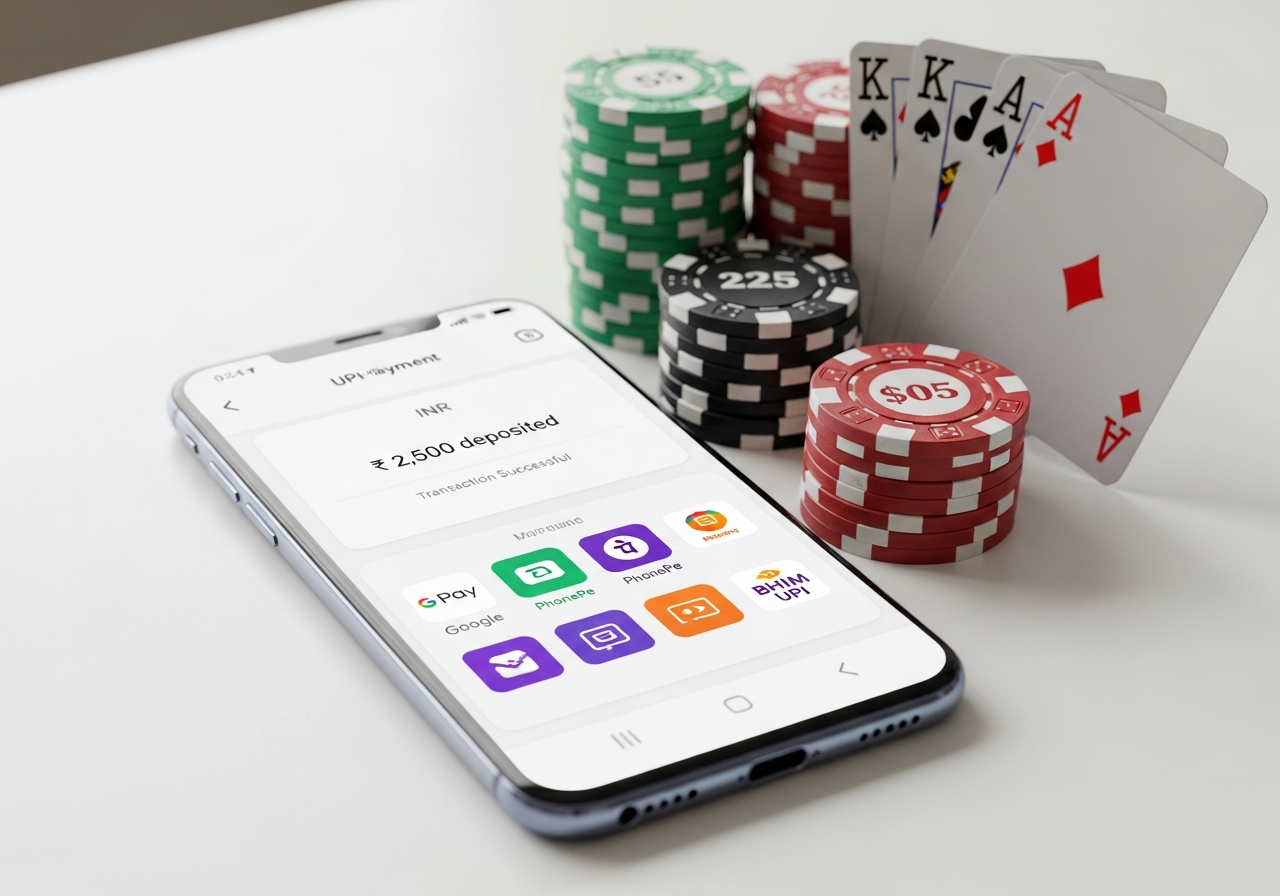
In India’s fast-growing real money casino market, Unified Payments Interface (UPI) has emerged as the undisputed backbone of digital deposits. Built on the National Payments Corporation of India (NPCI) rails and regulated under Reserve Bank of India (RBI) oversight, UPI enables instant INR transfers directly from bank accounts with unmatched convenience. Whether you use Google Pay, PhonePe, Paytm, or BHIM UPI, these apps have become synonymous with real money casino deposits across India, powering millions of transactions daily with near-instant settlement and wide operator acceptance.
For Indian casino players, understanding the nuances of UPI deposit methods goes far beyond simply knowing which apps to install. Different routing types—Person-to-Merchant (P2M), Person-to-Consumer (P2C), and Person-to-Person (P2P) flows—carry distinct implications for transaction speed, safety, and visibility. This practical guide compares popular UPI options, demystifies deposit processes, addresses regulatory aspects, and provides player-specific tips to help you choose the best UPI method for smooth, reliable casino banking tailored to your play style and transaction volume.
How UPI Deposits Work on Real Money Casino Apps in India
UPI is a real-time payment system governed by the NPCI, allowing you to link multiple bank accounts to a single mobile app and transfer funds instantly using a Virtual Payment Address (VPA) or QR code. Unlike traditional netbanking or card payments, UPI operates 24/7 with immediate confirmation, making it ideal for time-sensitive casino deposits. When you fund your casino account via UPI, the money moves directly from your bank account to the operator’s merchant or intermediary account within seconds, typically with no additional fees from the UPI network itself.
Understanding the routing type behind your UPI deposit is crucial. Person-to-Merchant (P2M) flows involve a licensed payment aggregator or gateway, appearing as a merchant transaction in your bank statement and offering the highest compliance and reliability. Person-to-Consumer (P2C) transfers route through intermediary consumer accounts managed by the operator or a third-party processor, sometimes offering faster approval but with moderate regulatory scrutiny. Person-to-Person (P2P) transactions, common on smaller or offshore platforms, are informal transfers to individual UPI IDs or accounts; while they may bypass certain payment blocks, they carry higher risk of bank flags or compliance issues and should be approached with caution.
It’s important to note that UPI is exclusively an INR-based system available only to Indian bank account holders. International players or those holding foreign currency accounts cannot use UPI rails directly, making it a purely domestic solution. For Indian users, this means seamless integration with the local banking ecosystem, but also full visibility of every transaction to your bank and, by extension, regulatory authorities.
Step-by-Step UPI Deposit Flow on Casino Apps
Most Indian real money casino apps have streamlined their UPI deposit process to a few intuitive steps, ensuring even first-time users can fund their accounts within minutes:
- Log in to your casino app and navigate to the cashier, wallet, or deposit section, typically accessible from the main menu or account dashboard.
- Select UPI as your payment method from the list of available deposit options, which may also include cards, netbanking, e-wallets, or cryptocurrency.
- Enter your deposit amount in INR, ensuring it falls within the operator’s minimum and maximum limits for UPI transactions.
- Choose your UPI input type: either enter your UPI ID (VPA) manually, scan a dynamically generated QR code with your UPI app, or select from a list of popular UPI apps for direct linking.
- Authorize the payment in your UPI app by entering your UPI PIN, biometric authentication, or other security credential configured on your device.
- Confirm the transaction in your casino app; most platforms display a success message and credit your account balance instantly or within 1–2 minutes.
- Verify your deposit by checking your casino wallet balance and bank statement to ensure the debit has been recorded correctly and no duplicate charges have occurred.
Types of UPI Transactions Used by Casino Operators
Casino operators typically employ one or more UPI transaction types depending on their payment infrastructure, licensing jurisdiction, and risk appetite. Person-to-Merchant (P2M) transactions route through licensed payment gateways such as Razorpay, Paytm Payment Gateway, or Cashfree, appearing in your statement with the aggregator’s or a generic merchant name. These flows offer the best compliance, lowest risk of blocks, and often come with chargeback protections, but may have slightly higher operator costs that can translate to stricter deposit limits or bonus eligibility rules.
Person-to-Consumer (P2C) and Person-to-Person (P2P) flows are more common on offshore or grey-market casino apps. In a P2C setup, your deposit is routed to an intermediary consumer account—often belonging to a payment processor or individual facilitator—before being credited to your casino wallet. While this can bypass certain merchant category code (MCC) restrictions that banks apply to gambling transactions, it carries moderate risk: banks may flag repeated large transfers to the same consumer accounts, and dispute resolution is less straightforward. P2P transfers, where you send money directly to a UPI ID or bank account provided by the operator, offer the least formal structure and highest risk of scrutiny or blocks, though they remain popular for their simplicity and lack of gateway fees.
Key UPI Deposit Methods and Apps for Indian Casino Players
The Indian UPI ecosystem is dominated by a handful of consumer apps, each offering slightly different features, transaction limits, and user experiences. While all UPI apps interoperate on the same NPCI infrastructure, their integration with casino cashier systems, daily transaction caps, and reliability can vary. Below is a comparison of the most popular UPI methods and apps used by casino players in India, highlighting typical use cases, speed, deposit ranges, fees, and ideal player profiles.
Casino operators often support multiple UPI apps to maximize player convenience, and many cashier interfaces allow you to select your preferred app during the deposit flow. For players, choosing the right UPI app depends on factors like your linked bank account, daily transaction limits, and whether you prioritize privacy (via generic statement descriptors) or rewards (via app-specific cashback programs).
| UPI method/app | Typical use on casino apps | Speed | Min/max deposit range (₹) | Fees/charges | Best for |
|---|---|---|---|---|---|
| Google Pay | QR scan, VPA entry, direct intent | Instant (1–10 sec) | ₹100 – ₹100,000 | Free (network charges only) | Casual players, frequent small deposits |
| PhonePe | QR scan, VPA, in-app selection | Instant (1–10 sec) | ₹100 – ₹100,000 | Free | Mid-stakes, bonus hunters |
| Paytm UPI | Paytm wallet + UPI hybrid, QR | Instant (5–15 sec) | ₹200 – ₹200,000 | Free (wallet fees may apply) | High rollers, integrated wallet users |
| BHIM UPI | VPA entry, QR scan | Instant (1–10 sec) | ₹100 – ₹100,000 | Free | Privacy-conscious players, government-backed trust |
| Bank-specific UPI (SBI, HDFC, ICICI, etc.) | Direct bank app UPI, VPA | Instant (5–20 sec) | ₹100 – ₹200,000 | Free | High rollers, maximum single-transaction limits |
Popular UPI Apps for Casino Deposits Explained
Google Pay and PhonePe dominate the casino deposit market due to their widespread adoption, seamless user experience, and broad compatibility with casino cashier systems. Google Pay’s strength lies in its intuitive QR-scanning interface and deep integration with Android devices, making it the go-to choice for casual players who value speed and simplicity. PhonePe offers similar functionality but often provides better transaction success rates on certain bank accounts, particularly Axis Bank, Yes Bank, and ICICI Bank, making it a favorite among mid-stakes and bonus-hunting players who need reliability during high-traffic deposit windows.
Paytm UPI occupies a unique position by blending UPI rails with Paytm’s proprietary wallet ecosystem. This hybrid model allows for higher single-transaction limits—up to ₹200,000 in some cases—and the option to fund deposits from either your linked bank account or your Paytm wallet balance. However, Paytm’s casino integration can be less consistent than Google Pay or PhonePe, with some operators excluding it from bonus-eligible payment methods due to past disputes over transaction reversals. High rollers appreciate Paytm UPI for its generous limits, but should always verify bonus terms before depositing.
BHIM UPI, the government-backed UPI app developed by NPCI, appeals to privacy-conscious players and those seeking maximum transparency and regulatory compliance. While BHIM lacks the flashy rewards programs of Google Pay or PhonePe, its bare-bones interface and direct NPCI oversight inspire trust among players wary of third-party data collection. Bank-specific UPI apps—such as SBI Pay, iMobile by ICICI, and HDFC Bank’s PayZapp—offer the highest single-transaction limits and are preferred by high rollers, but their casino cashier integration can be clunky, requiring manual VPA entry rather than one-tap authorization.
Comparing UPI Deposit Options: Speed, Limits, and Reliability
Not all UPI deposit routes are created equal. While the underlying NPCI infrastructure guarantees instant settlement, the path your deposit takes—whether through a licensed payment gateway, an intermediary consumer account, or a direct P2P transfer—significantly affects processing time, transaction limits, daily caps, overall reliability, and the risk of your transaction being declined or flagged by your bank.
Licensed payment gateways (P2M routes) deliver the most consistent experience, with transaction limits typically set by the operator rather than the payment method itself. Most Indian casino apps impose minimum UPI deposits of ₹100 to ₹500 and maximum single-transaction limits ranging from ₹50,000 to ₹200,000, though high-roller-friendly platforms may negotiate higher caps with their gateway providers. Daily limits are influenced by a combination of your bank’s UPI transaction cap (usually ₹100,000 to ₹500,000 per day across all UPI transactions), the operator’s anti-money-laundering (AML) thresholds, and any payment gateway-imposed daily or monthly volume restrictions.
Manual QR or VPA routes—common in P2C and P2P flows—offer more flexibility but come with higher variability. Processing times can stretch to 2–5 minutes if the intermediary account requires manual reconciliation, and the risk of blocks increases sharply if your bank detects repeated large transfers to the same consumer UPI IDs. Some players report intermittent failures when using lesser-known UPI apps or during peak hours (evenings and weekends), though re-attempting the transaction usually resolves the issue.
| Deposit route | Processing time | Transaction limit | Daily limit factors | Reliability | Risk of blocks |
|---|---|---|---|---|---|
| P2M gateway (Razorpay, Cashfree, etc.) | 1–10 seconds | ₹100 – ₹200,000 | Bank UPI cap + operator AML limits | High (99%+ success rate) | Very low |
| P2C intermediary account | 1–5 minutes | ₹200 – ₹150,000 | Bank UPI cap + operator discretion | Moderate (95%+ success rate) | Moderate (if frequent large deposits) |
| P2P manual transfer to UPI ID | 2–10 minutes | ₹100 – ₹100,000 | Bank UPI cap only | Moderate (90%+ success rate) | High (repeated use triggers flags) |
| QR code (operator-generated) | 1–15 seconds | ₹100 – ₹100,000 | Bank UPI cap + QR expiry limits | High (98%+ success rate) | Low (varies by merchant status) |
Understanding UPI Deposit and Withdrawal Limits
UPI transaction limits are governed by a three-tier structure: NPCI-imposed per-transaction caps (currently ₹100,000 per transaction for most use cases, though certain merchant categories and banks may allow up to ₹200,000), your bank’s daily aggregate UPI limit (typically ₹100,000 to ₹500,000 across all UPI payments in a 24-hour period), and the casino operator’s own deposit and withdrawal caps, which reflect their payment processor agreements, licensing requirements, and risk management policies.
For high rollers, managing these nested limits requires coordination. If your bank imposes a ₹200,000 daily UPI limit and your preferred casino caps single UPI deposits at ₹100,000, you can make two deposits per day but must ensure you’re not approaching your bank’s monthly suspicious transaction monitoring threshold—typically around ₹1,000,000 to ₹2,000,000 depending on account type and past transaction history. Some players maintain multiple bank accounts linked to different UPI apps to distribute large deposit volumes and minimize the risk of triggering automated compliance reviews.
How Fast Are UPI Deposits and Payouts in Practice?
UPI deposits are almost always instant, with funds appearing in your casino wallet within 1 to 30 seconds of UPI PIN authorization in over 95% of cases. The rare exceptions—taking up to 5 minutes—usually occur during NPCI system maintenance windows (typically late night) or when the operator’s payment gateway experiences temporary downtime. If your deposit does not credit within 10 minutes, check your bank statement: if the debit is visible, contact casino support with your transaction reference number (UTR) to request manual reconciliation.
Withdrawals, by contrast, depend heavily on the operator’s Know Your Customer (KYC) verification status and internal processing times. First-time withdrawals often require 24 to 72 hours for KYC document review, after which the UPI payout itself is instant once approved by the operator’s finance team. Repeat withdrawals on fully verified accounts can be as fast as 10 minutes to 2 hours, though some platforms batch withdrawal approvals twice daily (morning and evening). Always ensure your registered UPI ID or bank account matches your KYC name exactly to avoid delays or rejections.
Safety, Visibility, and Legal Context of Using UPI for Casino Apps
UPI’s security architecture is robust, with multi-factor authentication (UPI PIN plus device binding), end-to-end encryption, and RBI-mandated fraud monitoring built into every transaction. From a technical standpoint, UPI is one of the safest payment methods available to Indian casino players, with negligible risk of credential theft or unauthorized charges as long as you protect your UPI PIN and never share OTPs or screen-sharing access with third parties claiming to represent casino support.
However, UPI’s high security comes with a trade-off: complete visibility. Every UPI transaction is recorded in your bank statement with a transaction reference number, timestamp, recipient details, and amount. Unlike cash or certain cryptocurrencies, there is no practical anonymity. Your bank can see that you are transferring funds to a casino-related merchant, intermediary, or UPI ID, and banks are required under RBI’s AML and Combating the Financing of Terrorism (CFT) guidelines to monitor and report suspicious patterns. While most banks do not proactively block casino-related UPI transactions, repeated large or frequent transfers—especially to the same recipient—may trigger manual reviews or temporary holds pending clarification of transaction purpose.
It’s also important to understand the legal context: online gambling regulations in India are complex, with some states banning all forms of online betting while others permit games of skill. Regardless of state laws, UPI itself is a neutral payment rail; using it for casino deposits is not inherently illegal at the federal level, but players should be aware that their transaction history is fully auditable and may be scrutinized during income tax assessments or financial investigations.
Risk Management When Using UPI for Gambling Transactions
Smart UPI casino players adopt several risk-mitigation practices to ensure smooth, uninterrupted access to their funds:
- Maintain consistent deposit patterns: Banks are less likely to flag steady, regular deposits (e.g., ₹10,000 weekly) than sudden large spikes (e.g., ₹200,000 after months of inactivity). Establishing a predictable pattern reduces the chance of triggering automated risk alerts.
- Retain transaction proof and screenshots: Save UPI transaction receipts, UTR numbers, and casino wallet screenshots for every deposit and withdrawal. If disputes arise—such as delayed credits or bonus non-application—this documentation is essential for resolution with both the operator and your bank.
- Complete casino KYC immediately: Submit identity proof (Aadhaar, PAN card), address proof, and bank account verification documents as soon as you register. Verified accounts face far fewer withdrawal delays and are less likely to be flagged for suspicious activity by the operator’s compliance team.
- Diversify UPI apps and bank accounts: Avoid concentrating all casino transactions through a single UPI ID or bank account. Spreading deposits across two or three accounts reduces per-account visibility and provides backup options if one account experiences temporary blocks or limits.
- Monitor your bank’s transaction limits and alerts: Enable SMS and app notifications for every UPI debit, and periodically review your daily and monthly UPI spending. If you approach your bank’s caps, plan deposits accordingly or request limit increases through your bank’s customer service.
Best UPI Deposit Methods for Different Types of Casino Players
Choosing the optimal UPI route depends on your playing style, transaction volume, and priorities around speed, privacy, and bonus eligibility. Casual players prioritizing convenience will favor different setups than high rollers managing six-figure monthly volumes, and bonus hunters need to pay special attention to payment method eligibility clauses in casino terms and conditions.
The table below maps common player profiles to recommended UPI routes, typical deposit ranges, key advantages, and potential drawbacks, helping you tailor your UPI strategy to your specific needs.
| Player profile | Recommended UPI route | Deposit range (₹) | Advantages | Drawbacks |
|---|---|---|---|---|
| Casual player (slots, low stakes) | Google Pay or PhonePe via P2M gateway | ₹500 – ₹5,000 | Instant, simple, widely supported, bonus-eligible | Lower single-transaction limits may require multiple deposits |
| Bonus hunter (welcome offers, reloads) | PhonePe or BHIM via P2M gateway | ₹1,000 – ₹25,000 | Reliable bonus crediting, clear transaction records for disputes | Some operators exclude certain UPI apps from bonus terms |
| Mid-stakes regular (₹10k–50k/month) | Google Pay + Paytm UPI mix, P2M preferred | ₹5,000 – ₹50,000 | Flexibility across operators, good limits, low block risk | Must monitor cumulative monthly volume for bank thresholds |
| High roller (₹100k+/month) | Bank UPI (SBI/HDFC/ICICI) + Paytm UPI, P2M only | ₹50,000 – ₹200,000 | Maximum limits, multi-account diversification, lower per-transaction visibility | Requires proactive limit management and KYC diligence |
| Privacy-focused player | BHIM UPI or bank UPI, P2M with generic merchant names | ₹1,000 – ₹25,000 | Minimal third-party data sharing, generic statement descriptors | Limited privacy versus true anonymity; still fully visible to bank |
Choosing a Primary UPI App for Your Main Casino Bankroll
Your primary UPI app should balance transaction limits, casino cashier compatibility, and your linked bank account’s UPI capabilities. Google Pay and PhonePe offer the broadest casino support and most seamless user experiences, making them ideal for players who value plug-and-play simplicity. If your bank is HDFC, ICICI, Axis, or Yes Bank, both apps will deliver near-instant authorizations and high success rates.
For higher limits, Paytm UPI or your bank’s native UPI app (e.g., SBI Pay, iMobile) are preferable, especially if you regularly deposit ₹50,000 or more per transaction. However, verify that your target casino’s cashier explicitly supports your chosen app; some operators’ P2M gateways prioritize Google Pay and PhonePe integrations, and less common UPI apps may require manual VPA entry, adding friction to the deposit flow. Whichever app you choose, link it to a savings or current account you monitor closely, and enable transaction alerts to catch any unauthorized activity immediately.
When to Combine UPI with Other Payment Methods
While UPI excels for INR deposits up to ₹200,000, certain scenarios call for supplementing it with netbanking, cryptocurrency, or international cards. High rollers who regularly deposit ₹500,000 or more per month should maintain at least one alternative method—typically IMPS or NEFT via netbanking—to bypass daily UPI caps and distribute transaction volume across multiple payment rails, reducing per-rail visibility and compliance scrutiny.
Privacy-focused players may prefer to use UPI for smaller, regular deposits (e.g., weekly ₹10,000 top-ups) and reserve cryptocurrency such as Bitcoin or USDT for occasional large deposits, benefiting from crypto’s pseudonymity while keeping UPI’s instant settlement for day-to-day play. Similarly, if you travel internationally or play on offshore platforms with limited INR support, maintaining a Visa or Mastercard deposit option ensures uninterrupted access to funds even when UPI integration is unavailable.
Casino Apps in India That Work Best With UPI Deposits
Not all Indian casino apps offer equally polished UPI integration. The best UPI-friendly platforms combine instant deposit crediting, support for multiple UPI apps, transparent transaction limits displayed upfront, minimal manual reconciliation, and reliable withdrawal processing back to your UPI-linked bank account. Below are key characteristics of casino apps that excel in UPI deposit handling:
- Licensed P2M payment gateways (Razorpay, Cashfree, Paytm Gateway): These operators route UPI deposits through RBI-regulated aggregators, ensuring compliance, instant crediting, and smooth dispute resolution. Look for casino cashiers that display recognizable gateway branding during the deposit flow.
- Clear minimum and maximum limits: Top-tier casino apps publish their UPI deposit ranges (e.g., ₹500 min / ₹100,000 max) prominently in the cashier interface, avoiding unpleasant surprises when you attempt a deposit. Avoid platforms that only reveal limits after you’ve entered your payment details.
- Multi-app UPI support: The most user-friendly casinos allow you to select your preferred UPI app (Google Pay, PhonePe, Paytm, BHIM, or bank UPI) during the deposit process, rather than forcing a single app or generic QR code that may not integrate smoothly with your device.
- Instant deposit confirmations and transaction history: Premium casino apps display a real-time transaction status update and maintain a detailed deposit/withdrawal history within your account dashboard, complete with UTR numbers for every UPI transaction, simplifying record-keeping and dispute resolution.
- 24/7 customer support for payment issues: Since UPI transactions can occasionally fail due to network glitches or gateway downtime, the best casino apps provide live chat or phone support around the clock to resolve stuck deposits, bonus crediting delays, or withdrawal hiccups without forcing you to wait for email responses.
How to Evaluate a Casino App’s UPI Cashier Before Depositing
Before committing funds to a new casino app, conduct a quick audit of its UPI cashier quality. Navigate to the deposit section and check whether the operator lists specific UPI apps it supports, or only offers a generic “UPI” option with a QR code or manual VPA entry field—the latter often signals less sophisticated payment infrastructure. Verify that minimum and maximum deposit amounts align with your bankroll and play style; some casinos impose high minimums (₹1,000+) that may not suit casual players.
Read recent user reviews on forums or social media to identify any patterns of delayed deposits, stuck withdrawals, or bonus non-crediting linked to UPI payments. If the casino offers a welcome bonus, confirm that UPI deposits are explicitly listed as bonus-eligible in the terms and conditions; a surprising number of operators exclude certain payment methods from promotional offers. Finally, test the waters with a small initial deposit (e.g., ₹500) to experience the full deposit flow—from UPI authorization to casino wallet credit—before funding your account with larger sums.
Bonuses, Rakeback, and Rewards When Depositing via UPI
Most Indian casino apps extend their full range of bonuses—welcome packages, reload offers, cashback, and VIP rewards—to UPI deposits, recognizing UPI’s dominance in the market. However, bonus eligibility is never guaranteed; some operators exclude certain payment methods from specific promotions, and the fine print matters. Always verify in the bonus terms and conditions that “UPI” or “all payment methods” are explicitly listed as qualifying, and pay attention to wagering requirements, maximum bet limits, and game contribution percentages that may affect your ability to clear the bonus.
Welcome bonuses typically require a minimum qualifying deposit—often ₹1,000 to ₹5,000—to trigger the bonus credit. If you deposit below this threshold via UPI, the bonus may not apply. Reload bonuses and weekly cashback offers usually have lower minimums (₹500 to ₹1,000), making them more accessible for casual players. Some casinos also offer UPI-specific promotions, such as extra bonus percentages or reduced wagering requirements for deposits made via Google Pay or PhonePe, though these are less common than generic deposit bonuses.
Making UPI Deposits Bonus-Friendly
To maximize bonus value and avoid common pitfalls, follow these practical tips when depositing via UPI for promotional offers:
- Deposit in bonus-triggering increments: If a welcome bonus requires a minimum ₹5,000 deposit for the maximum bonus (e.g., 100% up to ₹10,000), deposit exactly ₹10,000 in a single transaction rather than splitting it into smaller amounts, which may not qualify.
- Opt in before depositing: Many casinos require you to manually activate a bonus by clicking an “Opt In” button or entering a bonus code before making your deposit. Depositing first, then opting in, often results in the bonus being forfeited with no recourse.
- Retain deposit receipts for bonus disputes: Save your UPI transaction screenshot and UTR number alongside a screenshot of the bonus terms page at the time of deposit. If the casino fails to credit your bonus, this documentation is essential for support escalation.
- Verify payment method eligibility: Some reload bonuses exclude “instant payment methods” or list specific payment types only. If UPI is not mentioned, ask live chat for confirmation before depositing.
Common Bonus Issues Linked to UPI Deposits
The most frequent bonus complaint from UPI depositors is delayed or missing bonus credits. This usually occurs when the operator’s system fails to match your deposit with the active bonus offer, often due to depositing below the minimum, opting in after the deposit, or using a UPI route (e.g., P2P manual transfer) that the casino’s automated bonus engine doesn’t recognize. If your bonus doesn’t appear within 10 minutes of deposit confirmation, contact support immediately with your transaction details and a screenshot of the bonus terms; most reputable casinos will manually credit the bonus after verification.
Another issue arises with wagering-related payout complications. Some casinos impose stricter withdrawal verification on bonus-funded play, requiring additional documentation (e.g., bank statements showing the UPI deposit) before approving payouts. If you’ve cleared wagering requirements but face withdrawal delays, ensure your registered casino account name, UPI ID, and linked bank account name all match exactly; mismatches can trigger anti-fraud holds that delay payouts by days or weeks.
Troubleshooting Failed or Delayed UPI Casino Deposits
Despite UPI’s reputation for reliability, occasional deposit failures or delays do occur, usually due to gateway downtime, bank-side transaction holds, incorrect VPA entry, or QR code expiration. Understanding the most common failure modes and their resolutions can save you frustration and prevent duplicate charges:
- Duplicate payment errors: If you authorize a UPI transaction but the casino cashier times out or shows an error, check your bank statement before retrying. If the debit is visible but your casino wallet hasn’t credited, wait 10 minutes, then contact casino support with your UTR number for manual reconciliation. Never re-attempt the deposit until you’ve confirmed the first transaction failed on the bank side.
- QR code failures: Dynamic QR codes generated by casino cashiers typically expire within 5 to 15 minutes. If you scan a QR code but your UPI app shows “Invalid QR” or “Merchant not found,” return to the casino cashier, cancel the pending deposit, and generate a fresh QR code.
- Blocked transactions: If your UPI transaction is declined with a message like “Transaction not permitted” or “Blocked by bank,” your bank may have flagged the recipient as high-risk. Contact your bank’s customer service to request clarification and, if appropriate, whitelist the merchant or intermediary UPI ID. Alternatively, try a different UPI app linked to another bank account.
- Incorrect VPA entry: Manually entering a UPI ID (VPA) is prone to typos. Double-check the format (e.g., username@bankname) and ensure there are no extra spaces. If the transaction fails with “Invalid VPA,” request a new VPA from casino support or switch to QR-based deposit.
- Gateway timeouts: During peak hours or NPCI maintenance windows, payment gateways may experience temporary downtime. If your deposit hangs at the “Processing” screen for over 2 minutes, close and reopen the casino app. If the issue persists, wait 15–30 minutes and retry, or contact casino support to check for known payment system issues.
When to Contact Your Bank, UPI Provider, or Casino Support
Determining whom to contact depends on where the transaction failure occurred. If your UPI app shows “Transaction Successful” and your bank statement reflects a debit, but your casino wallet remains unchanged after 10 minutes, contact casino support first—the issue is on the operator’s end, and they can initiate manual reconciliation using your UTR number.
If your UPI app displays a failure message such as “Declined by bank” or “Transaction not permitted,” and no debit appears in your statement, contact your bank to understand why the transaction was blocked and request removal of any restrictions on the recipient. If the problem recurs across multiple UPI apps and banks, the issue likely lies with the casino’s payment gateway or the recipient’s UPI account status—escalate to casino support and request an alternative deposit method.
UPI vs Other Deposit Methods on Indian Casino Apps
While UPI dominates Indian casino deposits, it’s not universally optimal. Comparing UPI to alternative payment methods—credit/debit cards, cryptocurrency, e-wallets like Paytm or Skrill, and direct bank transfers—reveals context-specific trade-offs in speed, privacy, fees, bonus eligibility, and best-use scenarios.
| Payment method | Speed | Privacy | Fees | Bonus eligibility | Best use case |
|---|---|---|---|---|---|
| UPI | Instant (1–30 sec) | Low (fully visible to bank) | Free | High (widely accepted) | INR deposits up to ₹200k, instant play |
| Debit/Credit Cards | Instant to 5 min | Low (visible to bank) | 0–2% gateway fee | Moderate (often excluded) | Backup when UPI unavailable |
| Cryptocurrency (BTC/USDT) | 10–60 min (network dependent) | High (pseudonymous) | Network fees (₹50–500) | High (widely accepted) | Large deposits (₹200k+), privacy priority |
| E-wallets (Paytm, Skrill) | Instant to 2 min | Moderate (visible to wallet provider) | 0–3% (Paytm free, Skrill varies) | Moderate (check T&Cs) | Players with existing wallet balances |
| Netbanking (IMPS/NEFT) | IMPS instant, NEFT 1–3 hours | Low (visible to bank) | ₹5–25 per transaction | High (widely accepted) | Very large deposits exceeding UPI caps |
When UPI Should Be Your First Choice
UPI is the optimal deposit method for the vast majority of Indian casino players, particularly those who prioritize instant deposits, zero fees, and seamless integration with the domestic banking system. If you’re depositing in INR, transacting below ₹100,000 per deposit, and comfortable with your bank seeing your gambling transactions, UPI offers the best balance of speed, reliability, and cost-effectiveness. Its universal acceptance across licensed and offshore casino apps, combined with the ease of using familiar apps like Google Pay or PhonePe, makes it the path of least resistance for casual and mid-stakes players alike.
UPI is also the best choice when claiming deposit bonuses, since nearly all Indian casino operators include UPI in their bonus-eligible payment methods. The instant transaction confirmation ensures you can start playing immediately, and the clear transaction records (with UTR numbers) simplify bonus dispute resolution if issues arise. For players who value traceability and regulatory compliance—whether for tax reporting or general peace of mind—UPI’s full auditability is a feature, not a bug.
Limitations of UPI for High-Volume or Privacy-Focused Players
Despite its strengths, UPI’s transaction caps and high visibility make it unsuitable for certain player profiles. High rollers depositing ₹200,000 or more per session will quickly hit UPI’s per-transaction and daily limits, forcing them to split large deposits across multiple transactions or days—an inconvenient workaround that increases the number of visible transactions in bank statements and may trigger enhanced monitoring. For these players, netbanking via IMPS (up to ₹5,000,000 per transaction on some banks) or cryptocurrency deposits offer more practical alternatives.
Privacy-conscious players will also find UPI’s transparency limiting. Every UPI transaction is permanently recorded with full recipient details, making it impossible to obfuscate gambling activity from your bank or financial regulators. While this visibility is not inherently problematic for players in jurisdictions where online gambling is permitted, those seeking to minimize their transactional footprint may prefer cryptocurrency or international e-wallets like Skrill or Neteller, which offer greater separation between banking and gambling activity—though at the cost of higher fees and slower processing times.
Advanced Tips to Optimise UPI Deposits and Withdrawals
Experienced casino players refine their UPI strategies over time, implementing practices that minimize friction, reduce the risk of blocks or delays, and ensure smooth fund flows in both directions. Key optimization techniques include matching your casino KYC details precisely to your UPI-linked bank account details, staggering large withdrawals across multiple days to avoid triggering operator-side AML reviews, and maintaining backup UPI accounts linked to different banks to provide redundancy if one account experiences temporary limits or compliance holds.
Another advanced tactic is to proactively communicate with your bank’s relationship manager if you’re a high-volume player. Some banks offer enhanced transaction limits or expedited dispute resolution for customers who notify them in advance of anticipated high gambling-related transaction volumes, particularly for premium or business account holders. While this approach requires transparency about your gambling activity, it can prevent unexpected blocks and ensure smoother operations over the long term.
Configuring Your UPI and Bank Settings for Smoother Gambling Transactions
To maximize UPI reliability for casino deposits, follow these configuration steps:
- Increase your daily UPI transaction limit: Log into your bank’s mobile app or netbanking portal, navigate to UPI settings or transaction limits, and request an increase to the maximum allowed (typically ₹100,000 to ₹500,000 per day). Approval is often instant for verified accounts.
- Enable SMS and app alerts for all UPI transactions: Activate real-time notifications in both your UPI app and bank app to catch unauthorized transactions immediately and monitor your daily spending against limits.
- Whitelist frequently used merchant UPI IDs or VPAs: Some banks allow you to create a list of trusted payees, reducing the chance of transactions being flagged as suspicious. Add your primary casino’s P2M gateway UPI ID to this list if supported.
- Link multiple bank accounts to your UPI app: Most UPI apps support linking 2–5 bank accounts. Distribute your casino deposits across accounts to spread visibility and provide backup options if one account’s daily limit is exhausted.
Future of UPI Deposits on Indian Real Money Casino Apps
The trajectory of UPI in India’s casino ecosystem points toward tighter integration, stricter KYC and AML compliance, and the emergence of hybrid payment gateway setups that blend UPI rails with other instant payment methods. As the RBI and NPCI continue to refine UPI regulations—particularly around merchant onboarding standards and transaction monitoring—casino operators will face pressure to adopt fully licensed P2M flows, potentially phasing out informal P2P and P2C routes that currently serve offshore platforms.
Future enhancements may include higher per-transaction limits for verified merchants (already piloted for healthcare and education sectors), real-time KYC verification integrated directly into the UPI deposit flow, and improved dispute resolution mechanisms that reduce the time required to reconcile failed or stuck transactions. For players, these changes promise greater reliability and security, though they may also bring increased regulatory scrutiny and reduced flexibility for those preferring informal payment channels.
How to Future-Proof Your UPI Casino Banking Setup
To maintain seamless UPI access as the regulatory landscape evolves, adopt these forward-looking practices:
- Maintain multiple UPI accounts across different banks: Diversification protects against single-bank policy changes, limits, or compliance actions that could disrupt your deposits. Keep at least two UPI-linked accounts active and funded.
- Complete and update casino KYC proactively: As compliance requirements tighten, operators will impose stricter verification standards. Submit high-quality identity and address documents, and re-verify annually or whenever you change your linked bank account.
- Monitor regulatory announcements from RBI and NPCI: Stay informed about changes to UPI transaction limits, merchant category restrictions, or new KYC requirements by following official NPCI bulletins and casino industry news sources.
- Develop a backup payment method portfolio: Don’t rely solely on UPI. Maintain access to at least one alternative method—netbanking, cryptocurrency, or international e-wallet—to ensure you can continue depositing if UPI availability or limits change.